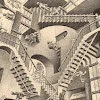
A Story About Soil
This is a story about soil.
Specifically, it’s a story about the limits on soil’s natural fertility, a mad scientist who broke those limits, and the consequences. In truth, this is a story about nitrogen.
78% of our atmosphere is nitrogen, but it’s found in the extremely stable N2 form. When two free nitrogen atoms encounter each other, they create a triple bond, an extremely stable connection that is rare in nature. It takes a substantial amount of energy to break a triple bond, and so, the N2 that fills our atmosphere is beyond the reach of most natural chemical processes. But at the same time, nitrogen is also the fourth most common element in our bodies. After hydrogen and oxygen, mainly in the form of water, and carbon, which forms the basis of our organic bonds, there is nitrogen, performing crucial roles in organic molecules from our amino acids to our DNA. Every living thing needs a decent amount of nitrogen to function. If it’s locked in the air, where does it come from? It does come from the air, but after a detour through the soil.
Soil is far more than inert dirt. It’s a constantly active sea of organic chemistry. There’s processes and lifeforms that exist in the air, those in the water, and those in the soil. Several of those lifeforms, many types of bacteria and fungi, have developed the ability to split the triple bond of N2. This quickly forms weaker single bonds in new molecules, which plants can split and use to create organic molecules. This is often done as part of a symbiotic relationship with the roots of plants. The fungi split the nitrogen, the plants consume it to grow, and animals consume the plants to grow. Break the chain, and nothing will grow. But this process has a crucial flaw. It’s slow.
Nitrogen replenishes in the soil at a glacial pace. It’s enough for wild plant life, mainly because most of the nitrogen the plants take out is eventually returned to the soil when plants decay or animals defecate. But if someone wanted to grow a lot of plants that rapidly produce high-energy fruiting bodies, take those products elsewhere to be eaten, and not close the loop by returning the same excrement to the soil? In other words, if someone was a farmer? Then nitrogen is being removed from the system.
Disclaimer: I’m massively simplifying here. There are a lot of other inputs to soil health, from phosphorous to organic matter to drainage to aeration. Nitrogen is the focus here because so much of it is needed and our solution makes for a good story.
It’s clear at this point that you can’t take nitrogen out of the soil forever or it’ll stop growing anything. Empires fell because of soil depletion. Humanity has been trying to find ways to get nitrogen back into the soil since we started farming. For a long time, we would let fields lie fallow for a year or so after a few harvests, to allow the soil time to replenish itself. A better method is to rotate crops with nitrogen-fixing plants such as soybeans, peanuts, or alfalfa, which have stronger symbiotic relationships with nitrogen-fixing microorganisms in their roots and add nitrogen to the soil faster than they remove it, even when harvested. The best method, though, is just to dump a bunch of usable nitrogen straight on top of the field. The limit is in getting enough of it. For millenia, humanity used nitrogen in the form it usually returns to the soil in nature, excrement. Manure from horses and cattle, or even better, guano from birds, were gathered and dumped on fields as fertilizer for millenia. .
But since the nitrogen in manure still requires plants as an input, this didn’t create any new fixable nitrogen, it just returned a portion of that which the soil produced. The rate we could add nitrogen to the soil was still limited by the rate at which the soil fixed it, which limited the amount of calories it was possible to produce. The human carrying capacity of the earth was four billion, based on the simple math of the rate at which the soil produces usable nitrogen. In other words, considering our population’s recent attainment of eight billion, half of all people living today could not be alive if their food was coming from the natural rate alone.
Now we must introduce the star of this story about soil, a genius and a monster named Fritz Haber. He was a chemist who led Germany’s chemical warfare program during WWi, and yet he may have saved more lives than anyone else who has ever lived.
Haber was a star chemist, a staunch German nationalist, and a lover of poison gas and bombs. One could say he was to WWI what Oppenheimer was to WWII, the creator of a new weapon that changed war forever. He personally oversaw the first successful use of chlorine gas in trench warfare. It’s worth dwelling on what chlorine gas does to a person. When chlorine comes in contact with water, it forms hydrochloric acid. The eyes and the inner lining of the lungs are two surfaces on the human body that are quite moist. It’s also heavier than air, so it stays near ground level and sinks into holes if released in large amounts. It takes a truly depraved mind to not only realize that, if used with a favorable wind, this gas could coat with acid the lungs and eyes of an entire trench of men, but to also then go and strenuously advocate for its use.
He justified the horrible deaths he caused by arguing he was bringing an earlier end to the war. Haber was, like many men of war before and since, suffering under the delusion that death may be ended by death, that, like Dante’s hell, the way out of war lies at its flaming center. That way lies ruin. He was a monster in other ways. His wife shot herself out of despair over the war and their marriage. He invented an insecticide called Zyklon A, later developed by others into Zyklon B, and used in the gas chambers of the Holocaust. However, his devotion to the German state did not save him when the Nazis rose to power, as he was also Jewish. He fled Germany in 1933 due to direct targeting by the Nazis and died of heart failure in Switzerland a year later.
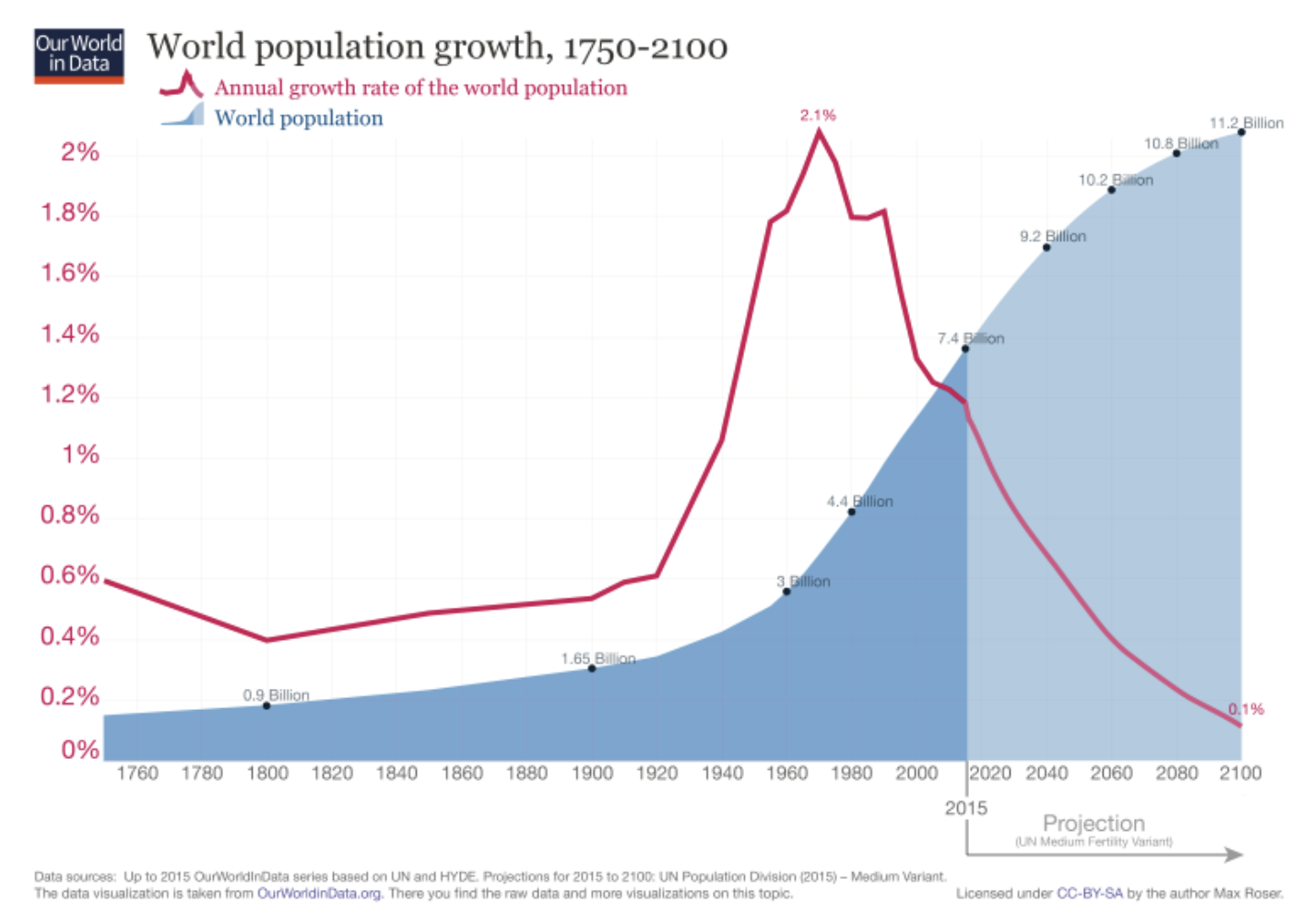
But, for all this, this depraved man was the one who discovered how to mass-produce usable nitrogen from atmospheric N2 in 1909. The Haber process is his simple and world-changing discovery that, when mixed with hydrogen and put under substantial heat and pressure, N2 breaks its triple bond and forms ammonia. For this, he received the Nobel prize and ended humanity’s reliance on the soil to fix nitrogen. This massively raised the ceiling on humanity’s food production, and with it, the limits on our population.
https://www.issuesofsustainability.org/helpndoc-content/ExponentialGrowthinWorldPopulati.html
That spike is the Haber process. It’s a few other things, but it’s all built on a foundation of a massive increase in agricultural productivity. Genesis 3:17 no longer applied, Adam no longer cursed to toil the ground. Now we dump nitrogen by the barrel into our fields. The limiting factor has been removed, as long as we can keep inputting nitrogen, food will come out at a rate to keep up a population over the natural soil carrying capacity.
Corn, wheat, and rice, the three central caloric grains, all take a lot of nitrogen. So do leafy greens, brassicas, and anything green you eat. Soybeans and other legumes don’t need as much. The Haber process has been refined and highly efficient machines have been built to make tons of ammonia for cheap. But when you need enough nitrate fertilizer to feed 4 billion people, it’s still not going to be easy or cheap to make that much. We produce more ammonia than any other chemical in the world, hundreds of millions of tons of it every year. So we needed ways to keep the ammonia flowing on the cheap. The solution turned out to be natural gas. Natural gas can be easily turned into the hydrogen side of the chemical equation, while also being used as the energy input to heat the machines. 3-5% of natural gas is used in fertilizer production, more natural gas than nearly every country in the world.
As a result, fertilizer production was concentrated in locations with a large supply of natural gas, such as the Persian Gulf, which supplies a third of nitrogen-based fertilizer traded on international markets. So now we have a stable, efficient, and modern system to route around the natural nitrogen fixing of the soil by fixing the nitrogen ourselves in fiery, energy-intensive industrial processes. Since the human population grew so far beyond natural boundaries off the back of this process, we have to make millions of tons of the stuff every single year or half of our species will starve. But there’s no cause for concern - as long as the fertilizer keeps flowing around the world, especially out of the Persian Gulf, everything will be fine!

https://www.nytimes.com/2026/02/28/world/middleeast/strait-of-hormuz-ship-traffic.html
Ah. Hm. That could be a problem.

https://news.un.org/en/story/2026/04/1167289
This could be a very large problem.
If 50% of the world’s calories rely on nitrogen fertilizers, and we just lost 33% of the supply, does that mean that 17% of the world’s calories are about to vanish? Not that bad, thankfully, but it’s still bad. First, it's a third of the globally traded supply of nitrogen fertilizer, but about two-thirds of nitrogen fertilizer is produced by countries for their own use and not internationally traded, particularly in the US, Russia, and China. Second, not applying fertilizer, or applying less, does not immediately cause soil depletion and crop failure the way it would over several years of intensive farming without fertilizer. It reduces yields, but does not eliminate them, at least on the first crop. Third, production is being ramped up elsewhere to make up the shortfall. Fourth, there are essential fertilizers besides nitrogen-based ones. When all’s said and done, we’ll hopefully produce enough calories to feed the world.
But there are caveats to all those mitigating factors. First, many countries do not produce their nitrogen domestically, and rely on Persian Gulf imports to grow their crops. These counties, mostly in South Asia and East Africa, will be the hardest hit. Second, agriculture in many of these areas is barely hanging on, and those who can get enough fertilizer are doing so at massively elevated prices, raising food prices even if there’s enough of it to go around. Third, China reacted by clamping down tight export restrictions on its domestically produced fertilizer, further limiting the supply of its importers in Brazil and Southeast Asia. Fourth, those non-nitrogen fertilizers are even more concentrated in the Gulf than the nitrogen-based ones. Anyway, since we were already producing enough calories to feed the world plus a few billion extra, and still 2 billion people are food insecure, the amount of calories may not have been the issue in the first place. We won’t see a billion people starve by the end of this year, but a lot of people will.
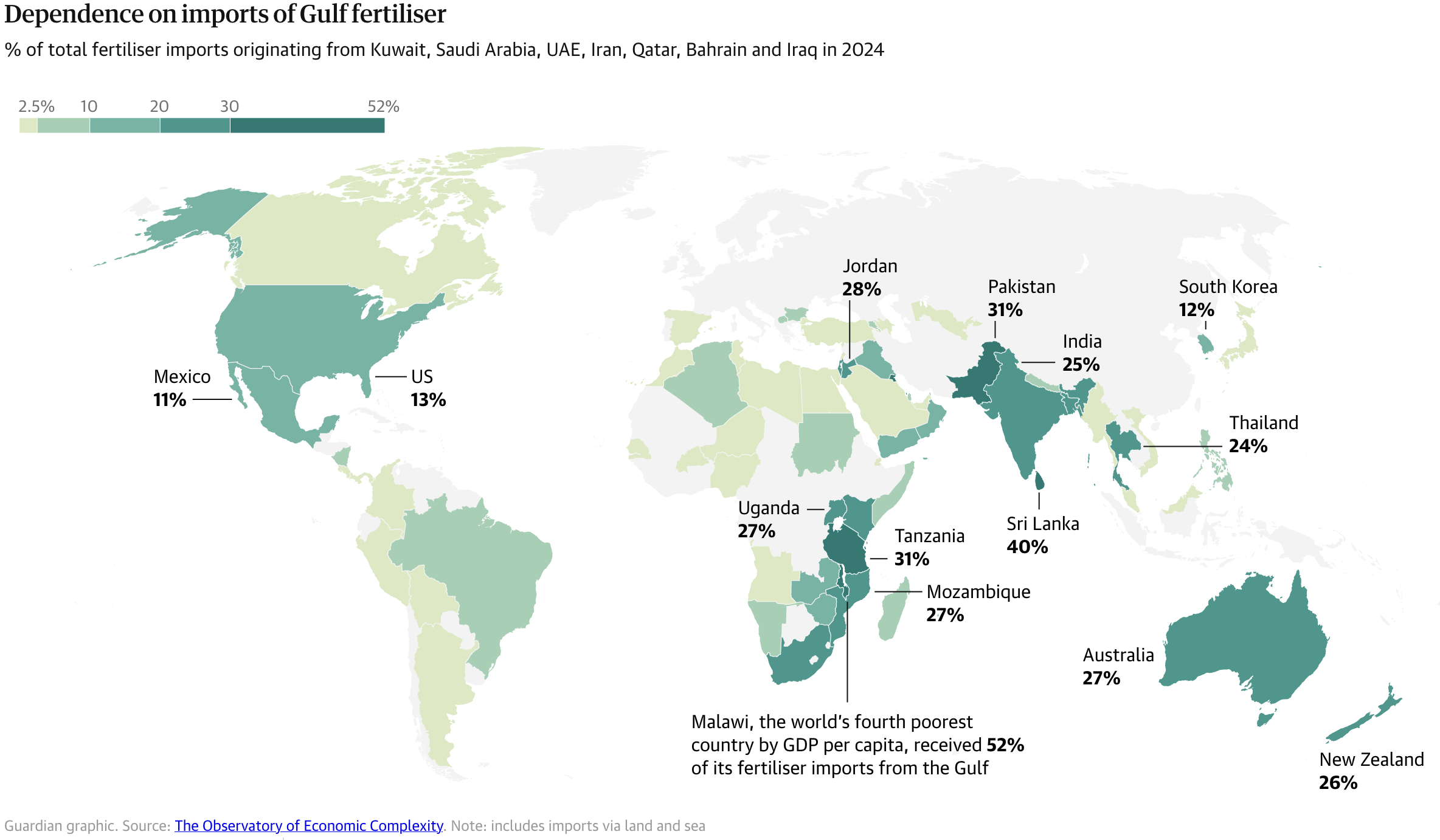
https://www.theguardian.com/world/2026/apr/03/visual-guide-gulf-fertiliser-blockade
It’s far from me to say how bad this could get. Agricultural shocks today tend to manifest in higher prices, not outright shortages, but high food prices are a reliable catalyst for civil strife, and outright shortages could be in the cards for some regions that don’t often see them. If that wasn’t bad enough, models are showing the worst El Nino in decades, possibly ever, is currently brewing in the Pacific. A strong El Nino has been known to interfere with the Indian Ocean monsoons, leading to both drought and floods across India and neighboring counties. El Nino also creates heatwaves and precipitation variability across the world, particularly in China, Central Africa, Western Europe, and the Southern USA. A generational food crisis seems to be shaping up to hit later this year, all because we became reliant on the Haber process.
To end in a summary for a child: plants need nitrogen to grow and we need to eat plants. Nitrogen is hard to get from the air, so we can’t get a lot of it naturally. A bad guy did a good thing by figuring out how to get nitrogen from the air. Now we have many more people because we make lots of nitrogen all the time to put on plants. Then another bad guy stopped us from doing as much of that. Now we might not have enough plants to eat. Oh no!